



Rolled Ice Cream Business: Profit Margins & Costs
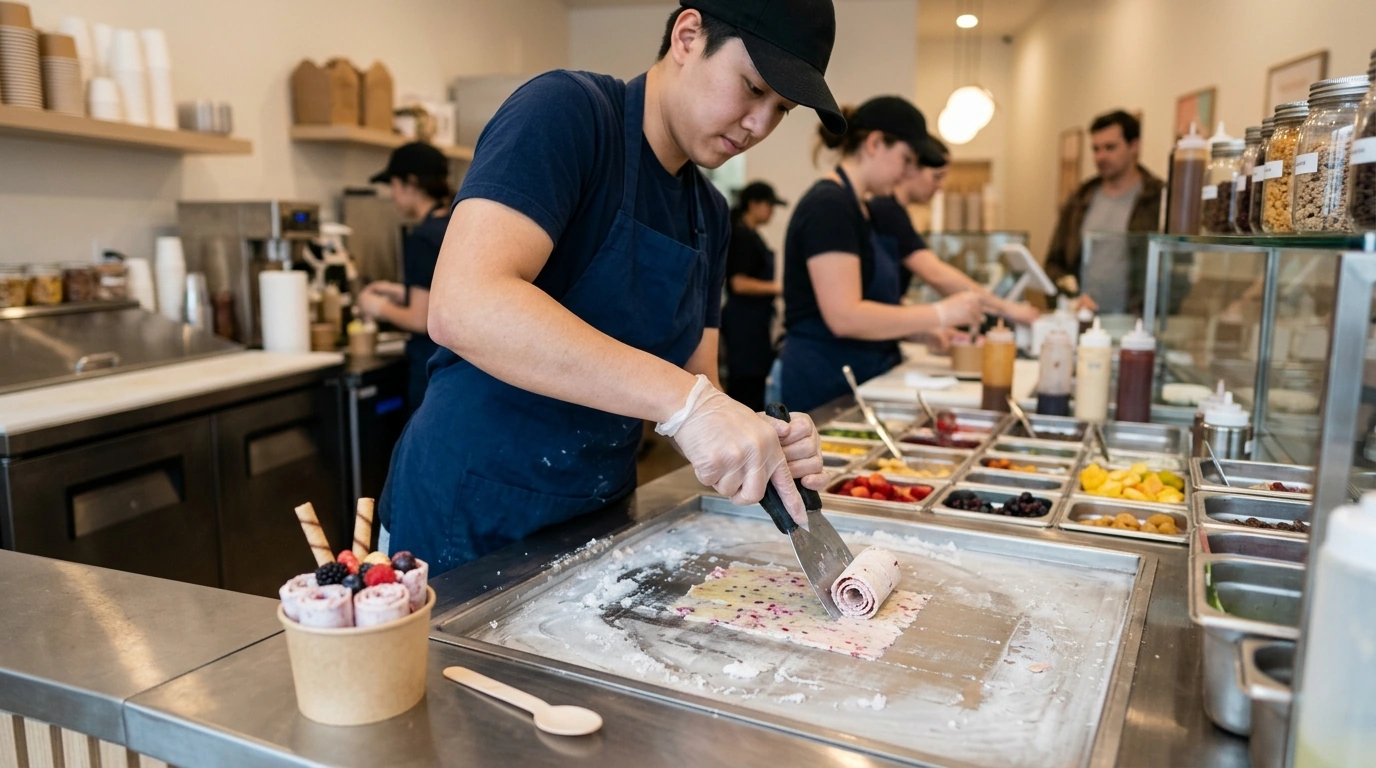
Is a rolled ice cream business profitable?
A rolled ice cream business can be profitable when pricing, foot traffic, and production speed line up with your costs. The appeal is strong: customers pay for a made-to-order “show” and premium add-ins, which can support higher per-serving prices than standard scoops. Profitability typically comes down to how many portions you can sell per hour and how consistently you can keep ingredients and labor from eating up margins.
What drives profit margins?
Ingredient costs for a single serving are often manageable, but toppings can quietly become the biggest variable expense if portions aren’t controlled. Your gross margin improves when you standardize recipes, pre-portion mix-ins, and price upgrades (extra toppings, premium bases) to match their real costs. Packaging is another factor—branded cups, spoons, and napkins add up—so it’s smart to track cost per order, not just cost per mix.
Sales volume and speed matter more than people expect
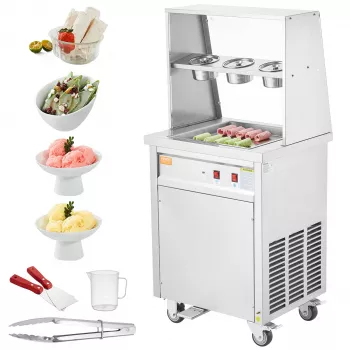
Rolled ice cream looks simple, but throughput can be the bottleneck. If a location is busy but production is slow, lines grow and sales are lost. A reliable roll machine setup and a smooth workflow (cold plate temp stability, efficient spatula technique, staged ingredients) help you serve more customers per hour without adding staff. For practical tips on equipment setup and operation, see this guide to rolled/fried ice cream roll machine setup and buying.
Location and seasonality
High-foot-traffic spots—malls, tourist areas, events, and near campuses—tend to outperform low-visibility storefronts. Seasonality is real in many regions, so profitability improves with strategies like catering, pop-ups, and partnerships that keep sales steady when walk-in demand dips.
Typical costs to plan for
Beyond ingredients, budget for rent, labor, permits, utilities (freezers can be power-hungry), maintenance, and marketing. Equipment quality matters because downtime is expensive; a machine that holds temperature and is easy to clean can reduce waste and labor minutes per order.
FAQ
How much does a rolled ice cream machine cost?
Prices vary widely by size and build quality, but most businesses should plan for a meaningful upfront equipment investment plus shipping, accessories, and potential service costs.













Leave a comment