



Fried Ice Cream Roll Machine Guide: Setup to Buying
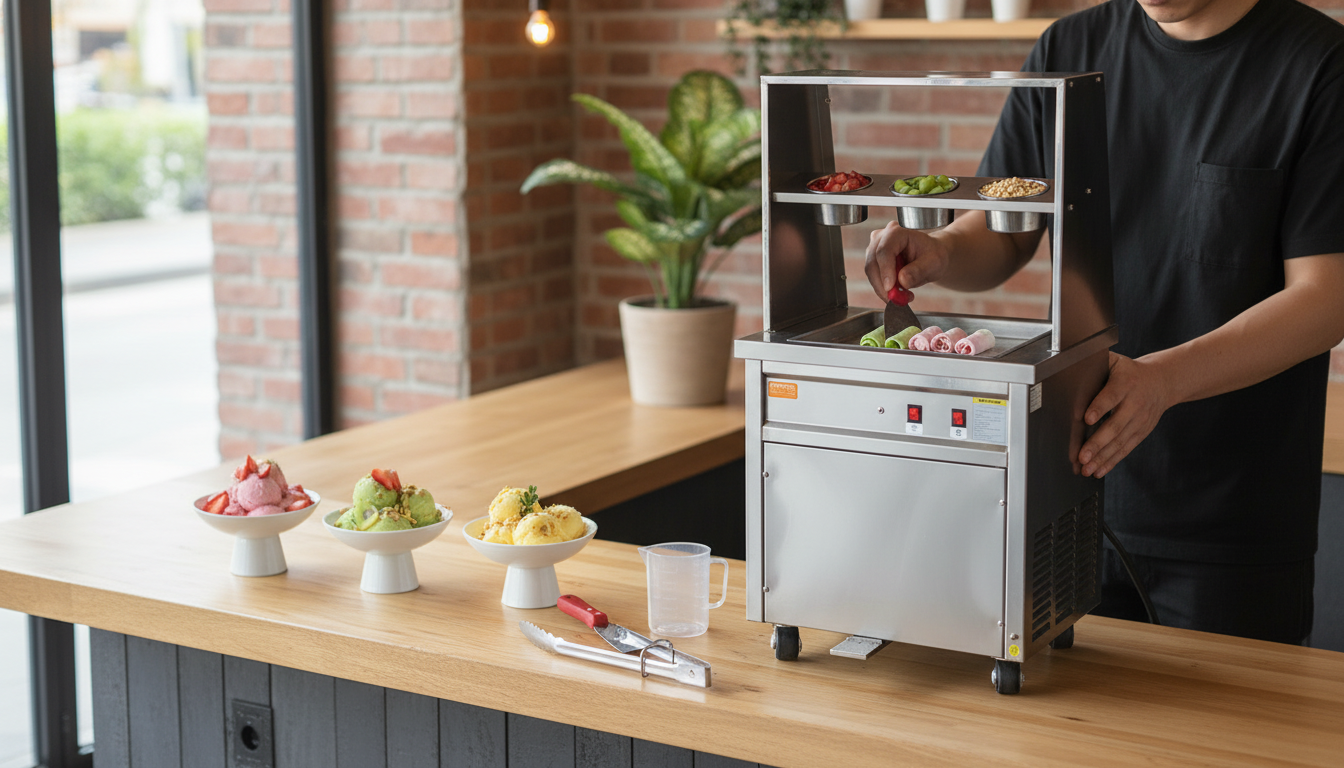
Fried Ice Cream Roll Machine: Setup, Operation, and Buying Basics
A fried ice cream roll machine (often called a rolled ice cream cold plate) turns a liquid base and mix-ins into thin frozen sheets that get scraped into tidy rolls. A dialed-in setup and repeatable routine help you serve faster, keep texture consistent, and make cleanup far easier—whether you’re running a kiosk, adding a dessert station to a café, or doing event service. For more guidance, see Stir-fried ice cream.
What It Does and Where It Fits
The machine rapidly freezes a thin layer of ice cream base on a chilled metal plate so you can chop in mix-ins, spread the mixture evenly, and roll it up on the spot. It’s a visual, premium dessert that works well for dessert kiosks, bubble tea shops, cafés adding an upsell item, event catering, and seasonal pop-ups. For further reading, see Fried ice cream balls – ICE CREAM NATION.
A typical workflow looks like this: pre-chill the plate, pour the base, add mix-ins, chop and spread into a thin sheet, scrape into rolls, and serve with toppings. For smoother lines, keep your base cold (but pourable) and your mix-ins pre-portioned so each order follows the same timing.
One naming note: “fried ice cream” is sometimes used in menus and product listings for this style, but rolled ice cream is made on a freezing plate. Traditional fried ice cream is a different dessert—breaded and quickly fried on the outside while staying frozen in the center.
Key Parts That Affect Results
Cold plate surface and flatness
A flatter plate freezes more evenly and helps you form uniform sheets. That translates into cleaner rolls with fewer cracks and less “slush” that sticks to the scraper.
Temperature control and recovery
Recovery matters during rushes. If the plate warms up between orders, freezing slows and the sheet can turn sticky, forcing you to overwork the mix and dulling the texture.
Spatulas and scrapers
Sharp, straight scraper edges reduce drag and speed up the roll. Comfortable handles also matter more than expected during high-volume service, especially when you’re chopping hard mix-ins like candy or nuts.
Drip management and splash control
Melt and rinse water need somewhere to go. Good drainage and splash control keep the station safer (less slip risk) and reduce the “sticky ring” that forms around the plate when sugar-heavy mix-ins get loose.
Capacity and Speed Planning for Real Service
Before buying, estimate how many servings per hour you need and whether you’ll run continuously (storefront) or in bursts (events). Also plan for recovery time: heavier mix-ins and thicker pours slow freezing, and a warm room can add seconds that turn into long lines.
Mise en place makes or breaks speed. Pre-portion base into squeeze bottles or pitchers, stage toppings in a rail, and keep cups and spoons within one step of the serving zone. A clean landing zone for finished cups prevents crowding and keeps the plate area focused on production.
| Scenario | Priority | Practical note |
|---|---|---|
| Pop-up events | Fast setup and cleanup | Bring insulated ingredient storage and a simple menu to keep lines moving |
| Small café add-on | Consistency and quiet operation | Keep a limited set of mix-ins to reduce cross-contact risk |
| High-volume kiosk | Recovery speed and durability | Design a two-person flow: one preps base/toppings, one rolls and serves |
| Home/party use | Ease of use | Pre-chill ingredients and simplify toppings for best results |
Power, Placement, and Everyday Safety
Start with power planning. Confirm your outlet requirements and avoid sharing circuits with other high-draw appliances during peak use, since voltage drops can reduce cooling performance. Placement matters too: leave ventilation clearance around the unit so heat can dissipate and the plate can hold a steady temperature.
For commercial service, use food-safe containers and tools and separate ready-to-eat toppings from any raw ingredients. Follow local health rules for dairy handling, time/temperature control, and sanitation logs. Two practical references are the U.S. FDA Food Code and USDA food safety guidance, especially for cold-holding and safe handling basics.
Cleaning and Maintenance Rhythm
Between orders, scrape off residue and wipe the plate with a food-safe sanitizer that’s compatible with the plate surface. Keep a dedicated towel or disposable wipes nearby so you don’t smear sugary buildup into the next batch.
Featured Option
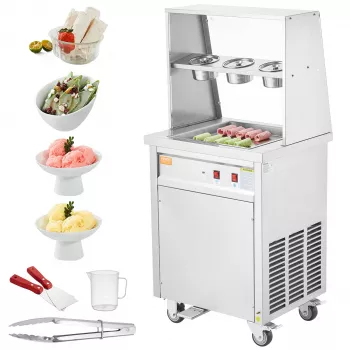
If you’re launching a rolled ice cream station or replacing improvised freezing methods, a dedicated unit keeps production predictable. The Fried Ice Cream Roll Machine is an in-stock option priced at $802.01 USD, designed for on-demand rolling with a purpose-built cold plate workflow.
Plan your accessory kit alongside the machine: serving cups, sturdy scrapers, topping containers, squeeze bottles for base, and a small prep surface for chopping mix-ins. For long shifts where you’re standing and moving quickly, comfortable footwear can help with day-to-day operations; consider options like Furla Women’s Black Leather Slippers. And for messy toppings and event service where quick wipe-downs matter, a simple protective layer can reduce splatter on clothing; a washable option like the Waterproof Silicone Baby Bib – Soft, Durable & Easy to Clean for Toddlers can also work as a quick cover during prep in casual, non-commercial settings.
FAQ
How much does a rolled ice cream machine cost?
Prices often vary by category: home/party units are usually the lowest, entry-level commercial machines land in the midrange, and high-volume machines with faster recovery and heavier-duty builds tend to cost more. Key price drivers include plate size, cooling/recovery speed, build quality, and control features. As one example, the in-stock Fried Ice Cream Roll Machine on this site is listed at $802.01 USD, which reflects that specific product rather than a market-wide average.













Leave a comment